
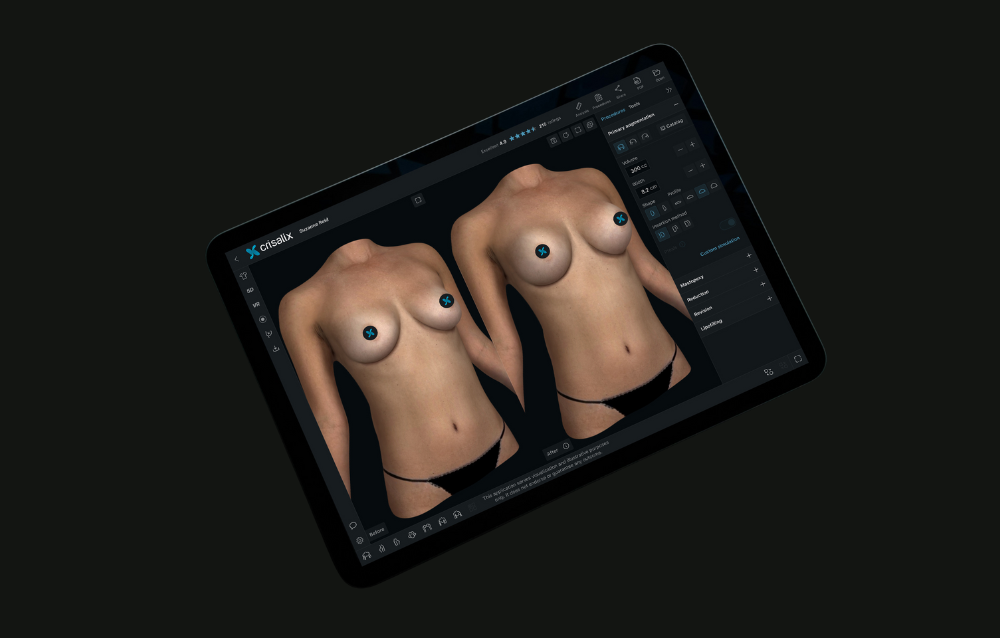
In recent years, medical aesthetics has seen a remarkable shift toward more immersive, patient-centric tools that help bridge the gap between expectations and real outcomes.
Among the innovations shaping this transformation, Crisalix stands out as one of the most influential. Known for its advanced 3D and 4D imaging technology, Crisalix gives both practitioners and patients the ability to visualize potential results before any procedure takes place.
In today’s digital landscape—where decision-making often starts online and is influenced by transparency and trust—Crisalix offers a unique advantage that can significantly improve consultation quality, enhance patient satisfaction.
Understanding Crisalix: A Revolution in Visual Simulation
Before diving into its benefits and applications, it is essential to understand what Crisalix represents in modern aesthetic practice. At its core, Crisalix is a cloud-based 3D/4D imaging system developed specifically for plastic surgery, cosmetic dermatology, and aesthetic procedures.
Its technology allows practitioners to create highly personalized simulations of post-treatment outcomes using patient photos or 3D scans, delivering unprecedented clarity during pre-operative consultations.
A New Era of Visualization
Where traditional consultations rely on verbal explanations, sketches, or before-and-after photos from unrelated cases, Crisalix enables a hyper-personalized visualization approach. The platform converts the patient’s own anatomical features into a detailed three-dimensional interactive model, allowing real-time adjustments of parameters such as implant size, contour modifications, volume enhancements, or skin improvements.
For patients, this means greater predictability, confidence, and informed decision-making.
How Crisalix Enhances the Consultation Process
Crisalix reshapes aesthetic consultations, from patient engagement to clinical planning.
Strengthening the Diagnostic Foundation
Aesthetic consultations begin with understanding the patient’s goals, the feasibility of different treatment approaches, and the anatomical constraints that shape possible outcomes. Crisalix acts as an analytical companion, helping practitioners compare multiple treatment paths side-by-side within a precise 3D model.
Using Crisalix’s integrated tools, surgeons can accurately evaluate symmetry, volume distribution, and proportional balance, allowing for a more evidence-based diagnosis. Because the visualizations mirror the patient’s actual appearance, both parties gain a shared reference point, reducing the risk of misunderstandings. Practitioners can highlight why certain techniques are preferable and show predictable results aligned with clinical expertise.
Improving Patient Communication and Engagement
Perhaps Crisalix’s greatest strength is its ability to transform patient communication. Many individuals seeking aesthetic procedures struggle to visualize abstract descriptions such as “mild augmentation,” “subtle lift,” or “mid-face volume enhancement.” By inserting a realistic 3D representation into the dialogue, these concepts become immediately clear.
Patients can interact with their simulated results, examining them from multiple angles, switching between versions, or adjusting treatment parameters. This interactive dimension creates a more immersive patient experience, which boosts engagement and reinforces satisfaction even before the procedure begins.
Managing Expectations Ethically and Transparently
Expectation management is one of the most delicate aspects of aesthetic medicine. Misaligned expectations can lead to dissatisfaction, even when the clinical result is objectively excellent. Crisalix helps mitigate this risk by enabling practitioners to demonstrate what is realistically achievable.
By presenting side-by-side comparisons, practitioners can explain the limitations dictated by anatomy or procedure type, ensuring patients fully understand the outcome spectrum. This promotes a transparent and ethical exchange, aligning the consultation with informed consent best practices.
The Technology Behind Crisalix
To appreciate the depth of Crisalix’s impact, it is worth examining the technology that powers its simulations.
This section introduces the features that enable its accuracy, speed, and adaptability across procedures.
3D Reconstruction and Data Processing
Crisalix uses a sophisticated algorithm capable of reconstructing a photorealistic 3D model from standard 2D images or from a dedicated 3D scanner. The system analyzes facial and body structures using morphometric data, providing a representation that closely mirrors the patient’s anatomical nuances.
The platform’s cloud-based architecture ensures rapid processing, allowing the simulation to be generated within minutes. These technical advantages elevate the quality of consultative discussions, providing real-time adjustments and eliminating delays.
4D Simulation for Dynamic Assessment
Beyond static images, Crisalix also offers 4D capabilities, which simulate how results change with movement—an essential feature for facial procedures, breast implants, and body contouring. 4D visualization helps patients understand the functional implications of aesthetic decisions.
This dynamic simulation is one of Crisalix’s most advanced features, especially when comparing competitors that rely solely on traditional 3D approaches. It positions Crisalix as a leader in predictive visualization and strengthens its authority in the field.
Integration With Clinical Workflow
Crisalix is designed to integrate seamlessly into modern clinics. It is compatible with multiple devices—including tablets, smartphones, and dedicated 3D scanning systems—providing flexibility during consultations.
Practitioners can easily store simulations, compare treatment paths, and incorporate results into pre-operative planning, enhancing procedural accuracy. This level of integration differentiates Crisalix from other platforms, making it a comprehensive tool rather than a standalone visualization product.
Crisalix and Patient Decision-Making: A Powerful Catalyst
Patients today are more informed and digital-savvy than ever. They research procedures extensively, compare providers, and rely on online reviews, social proof, and transparent communication.
Crisalix supports this new decision pattern by acting as a confidence-building instrument.
Reducing Uncertainty and Emotional Barriers
Making a decision about an aesthetic procedure often involves emotional hesitation. Patients may fear unnatural results or regret the decision. Seeing themselves with potential changes reduces these psychological barriers, encouraging patients to proceed with clarity and assurance.
This contributes to a smoother patient journey, from initial curiosity to scheduling the treatment, enhancing the clinic’s conversion rates without compromising ethics.
Improving Long-Term Satisfaction
When expectations align closely with outcomes, satisfaction naturally increases. Crisalix allows patients to take part in shared decision-making, choosing treatment parameters they truly feel comfortable with. This participatory approach not only improves satisfaction but also helps cultivate long-term patient loyalty—an invaluable asset for any practice.
Crisalix as a Cornerstone of Modern Aesthetic Consultations
Crisalix has become far more than a technological accessory—it is now a cornerstone of modern medical aesthetics, reshaping how practitioners communicate, how patients understand procedures, and how decisions are made.
Its advanced 3D/4D visualization, seamless workflow integration, and alignment with ethical communication standards make it a transformative asset during consultations.
As aesthetic medicine continues evolving, tools like Crisalix—combining science, technology, and patient engagement—will increasingly define what high-quality consultations look like.
Contact Dr. Möller to learn more about this advanced technology.