
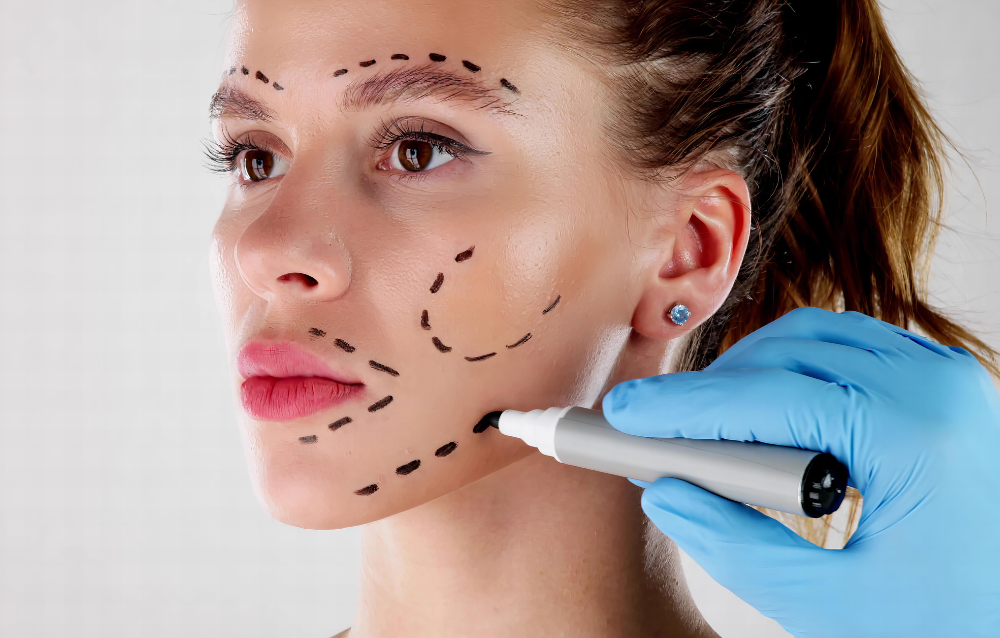
When considering a cosmetic surgical procedure like a facelift, it’s vital to understand exactly who stands to benefit most from it.
A facelift—also known as a rhytidectomy—is more than just a facelift: it involves careful evaluation of facial anatomy, skin quality, health status, lifestyle and realistic expectations.
In this article, we’ll draw on the practice and philosophy of the experienced plastic surgeon Dr Ernst Möller, whose work in aesthetic- and reconstructive surgery offers a valuable case study, as well as widely accepted best-practice guidelines from professional bodies.
Understanding the Facelift Procedure and Its Goals
Before determining who is a good candidate, it’s essential to understand what a facelift actually does—and what it does not.
What a Facelift Does for Facial Rejuvenation
A traditional facelift is designed to address signs of facial ageing, particularly in the lower two-thirds of the face—i.e., the cheeks, jawline, jowls, and neck.
According to guidelines, a facelift can correct:
- Sagging skin and soft tissue laxity along the cheeks and jawline.
- Loss of facial definition and the appearance of “jowls” (the loosened skin and tissue at the jaw line).
- Excess or displaced fat, and deep wrinkles or folds around the mouth and nose (nasolabial and marionette lines).
- Loose skin on the neck, and sometimes the so-called “turkey neck” or double chin scenario.
In the clinical practice of Dr Möller, this falls under his “facial surgery” category; his philosophy emphasises knowledge, artistry, and restoration of the body in harmony.
What a Facelift Does Not Do
It’s equally important to keep in mind what it cannot achieve—this helps delineate realistic expectations. According to authoritative sources, a facelift cannot:
- Permanently reverse the ageing process or deliver the look of someone in their 20s.
- Change the underlying bone structure of the face.
- Address issues of skin texture (such as pigmentation, sun-damage, surface lines) or discolouration alone.
- Replace non-surgical modalities that target volume loss (fillers), dynamic wrinkles (neurotoxins), or superficial skin concerns (laser, peels) in isolation.
With that clear foundation, let’s explore who is a good candidate—and why.
Core Criteria for an Ideal Facelift Candidate
Here we review the essential characteristics that collectively indicate a person is a strong candidate for a facelift procedure. Each of the H3 sub-sections breaks down a major factor.
Good Overall Health and Healing Capacity
One of the primary prerequisites: a candidate must be in good general health. According to the American Academy of Facial Plastic and Reconstructive Surgery, ideal candidates “are in good overall health without conditions that could impair healing.”
Specifically:
- Non-smokers or willing to stop smoking well before and after surgery (smoking severely affects wound healing and increases risk).
- Absence of uncontrolled chronic diseases (e.g., severe diabetes, heart disease, bleeding disorders or autoimmune conditions) that would complicate surgery or recovery.
- Good psychological well-being and realistic expectations: the candidate should understand both the benefits and limitations of a facelift.
In the practice of Dr Möller, the emphasis on “safe par excellence care” and a comprehensive individualized approach confirms the importance of assessing not just cosmetic goals, but overall health, context and safety.
Visible Signs of Facial Aging Combined with Good Skin Elasticity
An ideal candidate shows enough visible ageing to warrant surgery, yet still retains some skin elasticity and soft-tissue quality. Why?
Because lifting and repositioning tissues requires that the skin and underlying structures respond well to manipulation:
- Patients often in the 40s to 60s age bracket—but age alone isn’t determinative; skin quality matters more.
- Good candidates have sagging of cheeks, jowls, loose neck skin—but not fully collapsed musculature or extremely thin, sun-damaged tissue.
- Excessive sun damage, extreme weight loss (with lax loose skin), or very poor skin quality may reduce candidacy or require adjunctive solutions.
Dr Möller emphasises that each patient is unique and requires individualized treatment planning—with an in-depth overview of goals and anatomy. That reinforces the idea that presence of aging signs plus viable tissue is key.
Realistic Expectations and Motivated for Self—not Others
Another vital criterion: the candidate should have realistic expectations of what a facelift can deliver—and be motivated by personal goals (not external pressure):
- Understanding that a facelift will improve and refresh one’s appearance, not completely change identity or make one look decades younger in an unnatural way.
- Awareness that the ageing process continues post-surgery, and future maintenance or additional treatments may be required.
- Motivation grounded in self-improvement and confidence, rather than trying to comply with external beauty ideals or peer pressure.
In Dr Möller’s philosophy, the emphasis on trust, confidence and a personalised treatment plan underscores these non-physical factors.
Commitment to Pre- and Post-Operative Care and Lifestyle Considerations
A good candidate recognises that surgery is only part of the journey. Pre-operative preparation and post-operative care significantly influence results and recovery.
Important considerations include:
- Smoking cessation and avoidance of substances that impair healing.
- Commitment to follow-up visits, wound care, appropriate nutrition, avoiding strenuous activity during healing.
- Realistic appreciation of downtime, bruising, swelling, and gradual results rather than instant perfection.
- A lifestyle that supports the outcome: healthy weight, stable weight (no massive fluctuations), sun protection, skin care.
The structured approach of Dr Möller—using 3D simulation tools like Crisalix to set expectations—reinforces that optimal outcomes come from collaborative planning and patient engagement.
Who Might Not Be an Optimal Candidate?
While many people may feel that they might qualify, certain factors can make a facelift less appropriate or higher risk. Understanding these helps emphasise the trustworthiness and expertise dimension of the decision.
Poor Health, Smoking or Uncontrolled Medical Conditions
Individuals who have significant health issues—such as uncontrolled diabetes, serious cardiovascular disease, bleeding disorders, or who continue to smoke—are at increased risk for complications (infection, poor wound healing, necrosis).
In such cases, alternative rejuvenation strategies or postponing surgery may be safer.
Very Thin Skin, Advanced Sun Damage or Minimal Soft Tissue Laxity
When the skin lacks elasticity (due to extensive sun damage, extreme weight loss, or advanced age), the surgical result may be less satisfactory—and recovery more challenging. Some non-surgical or less invasive options may be preferable.
If the primary issue is surface texture, pigmentation, or drooping brows/upper eyelids rather than jowls and neck laxity, a facelift might not address the root concern.
Unrealistic Expectations or Underlying Psychiatric Issues
Candidates who expect perfect results, look for dramatic identity change, or have untreated psychological conditions may not be good candidates. Surgery may not satisfy deeper emotional needs.
Successful outcomes rely on aligning surgical goals with realistic anatomical and ageing-process limits.
Younger Patients Without Significant Signs of Ageing
While there is no fixed “minimum age” for a facelift, very young patients (e.g., under 40) who only have minimal signs of sagging may be better managed with less invasive treatments (fillers, thread lifts, skin-tightening devices).
Choosing a major surgery prematurely can carry unnecessary risk and might not yield the value expected.
Special Considerations and Contextual Factors
Beyond the core criteria, there are several nuanced factors that can influence candidacy. In the hands of a skilled practitioner like Dr Möller, these are carefully considered.
Male vs Female Candidates
While facelifts are often associated with women, men can also be excellent candidates. The same principles apply: good health, visible signs of aging, adequate tissue, realistic goals. Many surgeons emphasise that the facial anatomy, skin type, hairline and lifestyle must all be factored in.
Timing and Age of Surgery
As noted earlier, most “optimal” candidates fall in the 40-60 range, but chronological age is less important than tissue quality and health. Some older patients in good health may actually be better surgical candidates than younger patients with poor skin or uncontrolled comorbidities. Dr Möller’s philosophy of “comprehensive and individualized approach” means he assesses each patient on their unique ageing pattern, not just age alone.
Combined Procedures and Adjunctive Treatments
Often, a facelift may be combined with a neck lift, blepharoplasty (eyelid surgery), brow lift or injectables to achieve holistic rejuvenation. Patients who require multi-area rejuvenation may still be good candidates—but the surgical plan must reflect their full needs.
In Dr Möller’s practice, his offerings span facial, breast and body surgery; such breadth enables coordinated care when multiple areas are involved.
How to Determine If You Are a Good Candidate—Step by Step
Here is a practical walkthrough of how you or your surgeon might assess your candidacy for a facelift.
Step 1 – Self-Reflection and Health Review
- Review your medical history, current medications, lifestyle habits (smoking, alcohol, sun exposure).
- Consider your motivations: Are you doing this for yourself, or due to external pressure?
- Reflect on your expectations: Do you expect “complete youth restoration,” or a natural refreshed version of yourself?
Step 2 – Assessment of Facial Structure, Skin and Ageing Pattern
- Examine the skin quality: Is there good elasticity? Are there signs of sun damage, thinning skin?
- Identify key ageing changes: sagging cheeks, jowls, loose jawline, neck laxity.
- Note what aspects you want to improve vs what you expect the surgery to change.
- Choose a skilled plastic surgeon (for example, Dr Möller, who emphasises artistry and anatomical knowledge).
Step 3 – Surgeon Consultation and Surgical Planning
- A qualified surgeon will review your anatomy, discuss your goals, take clinical photos and possibly use 3D simulation tools (Dr Möller uses the Crisalix 3D experience) to set realistic expectations.
- They’ll evaluate your overall health to ensure safety for anesthesia and surgery.
- They’ll explain the various facelift techniques (mini-facelift, full facelift, combined neck lift) and why one may suit you better.
- They’ll explain potential risks, recovery timeline, and need for lifestyle adjustments (e.g., stop smoking, avoid sun).
Step 4 – Decision-Making and Pre-Surgery Preparation
- Decide whether to proceed—and ensure you are mentally prepared for the procedure and recovery.
- Complete any required medical tests and obtain clearance from your surgeon/anaesthetist.
- Make lifestyle changes as advised (quit smoking, optimise nutrition, sun protection).
- Arrange for post-operative care and support (transport, help during recovery).
Step 5 – Recovery and Long-Term Maintenance
- Follow surgical after-care instructions precisely: wound care, activity restrictions, avoid strenuous exercise initially.
- Attend all follow-up appointments and contact your surgeon if issues arise (swelling, infection signs, prolonged pain).
- Understand that while the facelift provides long-lasting results, ageing continues—so maintenance (skin care, healthy habits) remains important.
Contact us
Undergoing a facelift is a significant decision—one that should be guided not by wishful thinking, but by a clear, evidence-based view of your anatomy, health, lifestyle and expectations.
The question “who is a good candidate for a facelift?” is not answered simply by age or desire—it’s answered by a combination of health, anatomical suitability, skin quality, psychological readiness, and access to a surgeon with experience, artistry and integrity.
If you’re considering this path, the next step should be a detailed consultation with a specialist such as Dr Ernst Möller, where your individual case can be assessed holistically.
With the right preparation, realistic mindset, and expert guidance, you can make an informed decision about whether a facelift is the right choice for you.