
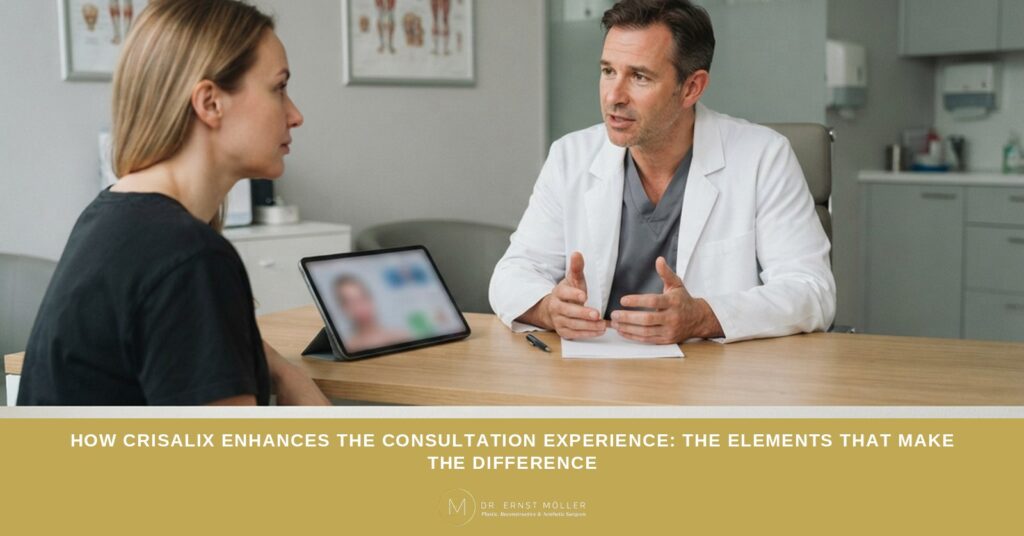
In the field of aesthetic medicine, plastic surgery, and cosmetic treatments, the consultation is often the most critical phase of the patient journey. It is the moment when expectations, concerns, motivations, and desired outcomes come together, shaping both the patient's confidence and the practitioner's ability to recommend the most appropriate treatment plan.
As patient expectations continue to evolve, traditional consultation methods are increasingly being complemented by advanced technologies that improve communication and decision-making. Among these innovations, the Crisalix consultation experience has emerged as a valuable tool for enhancing patient understanding and facilitating more productive discussions between practitioners and patients.
By integrating 3D simulation technology, visual communication tools, and personalized treatment planning, Crisalix helps transform consultations into a more interactive and informative experience. This article explores the key elements that make a Crisalix consultation different and how it contributes to better patient engagement, improved communication, and greater confidence throughout the decision-making process.
Understanding the Role of Consultation in Aesthetic Medicine
Before exploring the benefits of a Crisalix consultation, it is important to understand why consultations play such a fundamental role in aesthetic procedures.
Whether a patient is considering breast augmentation, rhinoplasty, facial rejuvenation, body contouring, or non-surgical treatments, the consultation serves as the foundation for informed decision-making. It is the stage where medical assessments are performed, treatment goals are discussed, and realistic expectations are established.
The Challenge of Visualizing Outcomes
One of the most common difficulties during aesthetic consultations is helping patients visualize potential results.
Even when surgeons provide detailed explanations and before-and-after photographs, patients may struggle to imagine how a procedure will affect their own body or facial features. Every individual has unique anatomy, making generic examples insufficient for fully understanding possible outcomes.
This communication gap can sometimes lead to uncertainty, misunderstandings, or unrealistic expectations.
The Importance of Shared Understanding
Successful consultations depend on creating a shared understanding between patient and practitioner.
Patients need to clearly communicate their goals, while practitioners must explain what is medically achievable and appropriate. The more effectively both parties communicate, the more likely they are to align on treatment objectives and expected results.
This is where advanced visualization technologies can significantly improve the consultation process.
What Is a Crisalix Consultation?
A Crisalix consultation is a technology-enhanced consultation that incorporates 3D imaging, patient-specific simulations, and digital visualization tools to support discussions about aesthetic treatments and surgical procedures.
Rather than relying solely on verbal explanations or reference photographs, practitioners can use Crisalix to create personalized visual simulations based on the patient's own anatomy.
Personalized 3D Visualization
One of the defining features of a Crisalix consultation is the ability to generate realistic three-dimensional representations of potential outcomes.
Using photographs and advanced imaging technology, practitioners can create simulations that allow patients to see projected results from multiple angles. This personalized visualization provides a more intuitive understanding of possible treatment outcomes than traditional methods alone.
Because the simulation is based on the patient's individual anatomy, it offers a highly personalized perspective that can facilitate more meaningful discussions.
Interactive Treatment Exploration
A Crisalix consultation also allows practitioners and patients to explore different treatment options together.
For example, patients considering breast augmentation can compare various implant sizes, shapes, and profiles. Similarly, facial procedures can be visualized with different approaches, helping patients better understand how specific changes may influence their overall appearance.
This interactive approach encourages active participation and supports a collaborative decision-making process.
How Crisalix Improves Patient Communication
Communication is one of the most important factors influencing patient satisfaction. Many misunderstandings arise not from the treatment itself but from differing interpretations of expected outcomes.
Transforming Abstract Discussions into Visual Conversations
Traditional consultations often rely heavily on descriptive language.
Terms such as "more projection," "improved symmetry," or "enhanced contour" may be interpreted differently by different individuals. Visual simulation helps translate these abstract concepts into tangible representations.
Instead of imagining possibilities, patients can view personalized simulations that make discussions more concrete and easier to understand.
This visual communication can help reduce ambiguity and improve clarity throughout the consultation process.
Encouraging Patient Engagement
Patients who actively participate in consultations tend to feel more informed and confident about their decisions.
The interactive nature of a Crisalix consultation encourages questions, discussion, and exploration of different options. Patients can provide immediate feedback while viewing simulations, helping practitioners better understand their preferences and priorities.
This collaborative approach supports a more patient-centered consultation experience.
Supporting Informed Decision-Making
Making decisions about aesthetic treatments often involves balancing emotional motivations, personal goals, medical considerations, and realistic expectations.
Enhancing Understanding of Potential Outcomes
One of the primary benefits of visualization technology is its ability to improve patient understanding.
When patients can visualize potential changes using their own images, they may gain a clearer perspective on what a treatment could achieve. This improved understanding can support more informed discussions regarding benefits, limitations, and treatment alternatives.
Importantly, practitioners can use simulations as educational tools while emphasizing that simulations are not guarantees of final outcomes.
Facilitating Realistic Expectations
Managing expectations is a fundamental component of ethical aesthetic practice.
While simulations can help patients envision possibilities, they also provide an opportunity for practitioners to explain the realistic scope of treatment results. This can contribute to greater transparency and help ensure that patient expectations remain aligned with clinical realities.
When expectations are realistic, overall satisfaction with the consultation and treatment process may improve.
The Psychological Impact of Visualization
The consultation process is not solely clinical; it is also deeply emotional.
Patients often approach aesthetic treatments with excitement, uncertainty, and numerous questions about how changes may affect their appearance and self-confidence.
Building Confidence Through Understanding
Uncertainty is frequently one of the greatest barriers to decision-making.
By helping patients visualize potential outcomes, a Crisalix consultation may reduce some of the anxiety associated with the unknown. Having a clearer picture of possible results can increase confidence and provide reassurance during the decision-making journey.
This enhanced understanding often contributes to a more positive consultation experience.
Strengthening Trust Between Patient and Practitioner
Trust is a cornerstone of successful patient-practitioner relationships.
When practitioners invest time in explaining procedures through personalized visual tools, patients may feel that their concerns are being addressed more thoroughly. The transparency and educational value of simulation technology can reinforce trust and foster stronger communication throughout the treatment journey.
Benefits for Practitioners
While much attention is given to patient advantages, practitioners also benefit from technology-enhanced consultations.
More Efficient Consultations
Visual simulations can help streamline discussions by making complex concepts easier to explain.
Instead of relying exclusively on lengthy verbal descriptions, practitioners can demonstrate ideas visually, allowing conversations to become more focused and productive.
This efficiency can support better communication while maintaining a high standard of patient education.
Improved Treatment Planning Discussions
Treatment planning often involves evaluating multiple options.
By visualizing different approaches during a Crisalix consultation, practitioners can guide patients through various possibilities and explain the rationale behind specific recommendations. This creates a more structured and informative planning process.
Differentiation in a Competitive Market
The aesthetic industry has become increasingly competitive, with patients seeking providers who offer exceptional experiences in addition to clinical expertise.
Integrating advanced consultation technology can demonstrate a commitment to innovation, patient education, and personalized care. For many clinics, this can become an important differentiating factor.
The Future of Digital Consultations in Aesthetic Medicine
Digital transformation continues to reshape healthcare, and aesthetic medicine is no exception.
Patients increasingly expect personalized experiences, transparency, and technological innovation throughout their healthcare journeys. Tools such as 3D simulation, virtual consultation platforms, digital treatment planning, and patient education technologies are becoming increasingly integrated into modern practice.
The Crisalix consultation model reflects this broader shift toward more interactive, data-driven, and patient-centered consultations.
As technology continues to evolve, the role of visualization and digital communication tools is likely to become even more significant, helping practitioners deliver more engaging and informative patient experiences.
Book a consultation today
The consultation is one of the most influential stages in the aesthetic treatment journey. It shapes patient understanding, establishes expectations, and lays the foundation for informed decision-making.
A Crisalix consultation enhances this process by combining 3D simulation technology, personalized visualization, and interactive communication tools. By helping patients better understand potential outcomes and encouraging collaborative discussions, it supports clearer communication, stronger trust, and more informed choices.
While technology cannot replace the expertise, judgment, and experience of qualified practitioners, it can serve as a valuable complement to the consultation process. As patient expectations continue to evolve, solutions that improve communication and understanding are becoming increasingly important in delivering high-quality aesthetic care.
Book a consultation with Dr. Ernst Moller and his team of experts.