
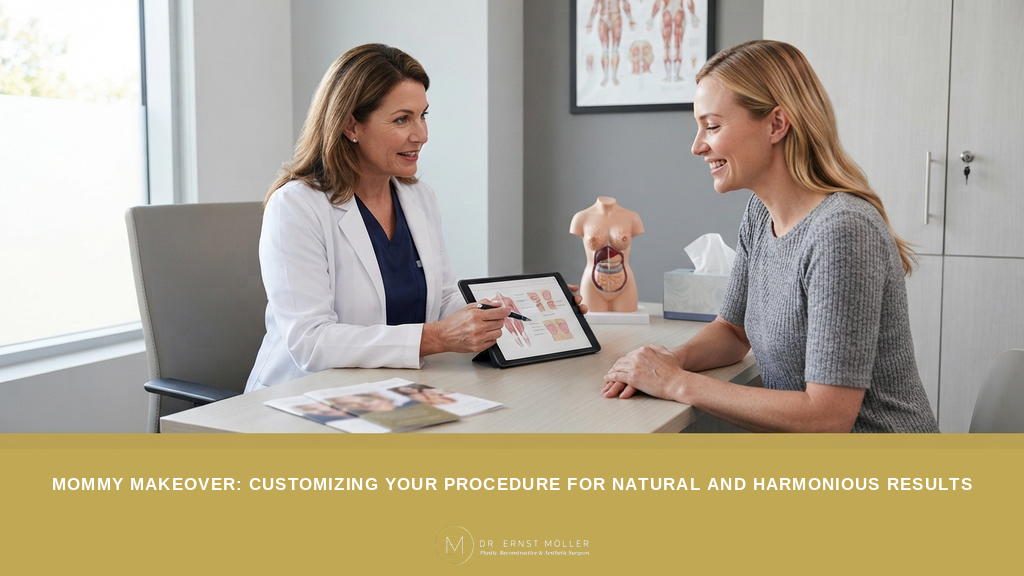
Pregnancy and childbirth bring profound physical changes that often persist long after nursing and initial postpartum recovery. While regular physical activity and balanced nutrition support overall vitality, they may not fully resolve stretched abdominal muscles or changes in breast tissue volume. A customized MOMMY MAKEOVER offers a structured approach to address these distinct anatomical concerns, helping restore physical comfort and body harmony.
Achieving balanced results relies heavily on tailoring each treatment plan to match individual physical characteristics. Rather than applying a standard approach, modern plastic surgery focuses on proportional alignment and careful planning. Understanding how combined surgical techniques work together allows patients to approach their consultation with clear expectations and confidence.
Understanding the Core Surgical Components
A comprehensive surgical plan often addresses multiple body areas affected by childbearing. According to clinical standards, a MOMMY MAKEOVER typically targets the breasts and abdomen through a tailored combination of procedures. These interventions commonly include a TUMMY TUCK, breast surgery, and localized LIPOSUCTION to refine contours. Depending on individual needs, breast options may involve a BREAST LIFT, BREAST AUGMENTATION, or BREAST REDUCTION SURGERY RESTORE BALANCE.
Combining breast procedures with abdominal contouring allows the surgeon to create balanced proportions in a single operational setting. For instance, BREAST AUGMENTATION can be safely integrated with a BREAST LIFT, TUMMY TUCK, or LIPOSUCTION as part of a unified plan. This coordinated strategy ensures that upper and mid-body revisions complement each other naturally. Each component is selected based on functional requirements and aesthetic goals.
Selecting the right mix of surgical options requires careful clinical evaluation during your initial visit. Patients interested in non-prosthetic volume restoration might also explore a BREAST LIPOFILLING NATURAL BREAST ENHANCEMENT WITH FAT, provided sufficient donor fat is available. During your consultation, advanced visualization technology such as CRISALIX can assist in reviewing procedural goals. Every element is aligned to ensure safe execution and harmonious proportions.
Personalizing the Approach for Natural Proportions
Achieving natural-looking outcomes requires a meticulous evaluation of individual anatomical structures. A surgical plan is tailored by assessing the desired level of physical restoration, tissue elasticity, healing ability, and incision placement to minimize visible scarring. Furthermore, decisions regarding tissue remodeling—such as choosing between fat transfer techniques or surgical implants—depend on existing tissue volume. Personal preferences and physical baselines guide every surgical choice.
Incision design plays a central role in maintaining surgical discretion and structural integrity. Patients should consult with their plastic surgeon to explore surgical options for incision placement during post-pregnancy procedures. Strategic placement along natural body creases ensures that surgical marks remain well-concealed under standard clothing or swimwear. Open communication regarding scar placement helps align expectations before entering the operating room.
Harmonious body contouring respects the natural contours of the patient rather than aiming for artificial exaggeration. For individuals who have undergone dramatic weight changes prior to surgery, techniques aligned with MASSIVE WEIGHT LOSS BODY CONTOURING may be incorporated. Patients seeking minor skin refinements after healing might also evaluate SCAR REVISION at a later stage. Thorough pre-operative design ensures that every adjustment enhances natural symmetry.
Essential Pre-Operative and Health Considerations
Patient safety remains the paramount priority when planning combined body procedures. Medical guidelines require candidates undergoing surgery to be in good overall health and free from untreated systemic conditions such as heart disease or diabetes. An individual's unique physical anatomy and healing capacity serve as primary considerations when designing a surgical plan. Addressing underlying health factors beforehand minimizes surgical risks and supports smooth tissue repair.
Strict lifestyle adjustments are mandatory prior to scheduling a complex surgical session. Smoking is strictly prohibited because it severely impairs tissue perfusion, compromises healing, and elevates the risk of serious complications. Patients must also disclose all medications and supplements during pre-operative clearances. Preparing the body physically establishes a solid foundation for uninterrupted recovery.
Understanding surgical complexity is vital when evaluating multi-procedure operations. Combining multiple surgical steps places significant physical demands on the body regarding wound healing. Clinical consensus notes that undergoing a greater number of procedures inherently increases the overall risk of potential complications. A thorough pre-operative assessment with Dr. Moller helps determine whether combining procedures or staging them is the safest approach.
Navigating Recovery: Timeline and Postoperative Care
Managing expectations regarding postoperative recovery helps patients prepare their home environment effectively. Combining multiple procedures offers the significant advantage of a single consolidated recovery period, even though the initial days may feel more physically intense. The total duration of recovery varies according to the specific number of procedures performed, as more extensive surgeries generally lengthen the healing timeline. Among combined options, the TUMMY TUCK component is typically experienced as the most uncomfortable aspect.
Attending scheduled clinical follow-up appointments ensures that wound healing progresses as expected. A routine follow-up evaluation is generally scheduled within five days post-surgery to remove surgical drainage tubes and inspect incision lines. Patients are instructed to strictly avoid lifting, driving, heavy household cleaning, or doing laundry during early recuperation. Adhering strictly to these physical restrictions protects deep sutured tissues from excessive strain.
Gradual reintroduction of daily tasks must be guided by clinical evaluations rather than personal timelines. Patients should expect to take roughly two weeks off from employment, depending on the physical demands of their job role. Driving may typically be resumed within two to three weeks, provided pain medications have been discontinued and drain tubes are fully removed. Patience during these early weeks supports long-term scar quality and structural stability.
Practical Home Support and Physical Activity Limits
Establishing a robust support network at home is a necessity for postpartum surgical recovery. Patients with young children under five years of age must secure dedicated childcare assistance for at least the first two weeks post-surgery. Because lifting is strictly limited, having help with routine childcare duties prevents accidental abdominal strain. Proper home assistance allows the patient to rest quietly without compromising early healing.
Strenuous physical exertion must be strictly restricted during the intermediate healing phase. Heavy lifting, contact sports, jogging, and picking up children or heavy laundry baskets should be avoided for four to six weeks following surgery. Exceeding physical boundaries too early can lead to wound separation or prolonged swelling. Light, frequent walking around the house is encouraged to maintain healthy blood circulation.
Following tailored aftercare guidelines optimizes both comfort and final aesthetic outcomes. For patients undergoing concomitant procedures such as LABIAPLASTY or facial refinements like BLEPHAROPLASTY, clear instructions are provided for each surgical site. Long-term tissue settling occurs gradually over several months as residual swelling resolves completely. Consistent adherence to medical advice protects your health and surgical investment.